Recall beats rereading.
Trying to remember an answer strengthens the memory far more than reading it again — and the advantage grows the longer it is until you're tested.
Roediger & Karpicke, 2006Send students forward with civic knowledge that sticks: short lessons, practice that builds real recall, games that make repetition worth it, and review that brings back what they miss.
Demo and pilot inquiries get a response within one school day.
The 128 questions at the core of Flying Colors aren't trivia — they're the civics test the United States gives immigrants who want to become citizens. Most Americans can't answer them: in one national survey, only about 1 in 3 could pass a quiz built from these questions, and just 19% of adults under 45. Students deserve to actually learn this material — well before they're the ones voting on it.
questions on the U.S. citizenship test — the exact bank Flying Colors teaches.
of Americans would pass a quiz built from U.S. citizenship-test questions — just 19% of those under 45.
of 8th graders reached NAEP Proficient in civics in 2022.
of U.S. adults could not name a single branch of government in 2025.
This site introduces gamified elements, progress tabs and leaderboards to civics test preparation, which I have never seen before!
Making every question free response ensures that the information must be known, and details are provided.
The questions are key to the areas in US History and follow most of our state standards.
From an independent five-teacher review of Flying Colors, May 2026. Quotes published anonymously.
Flying Colors turns civic knowledge into a repeatable loop students can actually move through.
Short explanations and memory hooks make each idea easier to grab.
Students answer questions instead of passively reviewing facts.
Questions you miss resurface on a schedule, so practice means pulling the answer from memory — not rereading it.
Students, parents, and programs can see what is sticking and what still needs work.
Missed ideas come back on a spaced schedule, so Track feeds straight back into Learn until the knowledge holds.
Flying Colors runs on two of the most-studied ideas in learning science: you remember what you practice recalling, and what you revisit over time.
Trying to remember an answer strengthens the memory far more than reading it again — and the advantage grows the longer it is until you're tested.
Roediger & Karpicke, 2006Knowledge lasts when practice is spread out and revisited, not crammed in one sitting. A synthesis of 300+ experiments found spaced practice reliably improves long-term recall.
Cepeda et al., 2006A landmark review of ten common study methods rated practice testing and spaced practice the most effective — well above rereading and highlighting.
Dunlosky et al., 2013It's the loop Flying Colors runs: learn, practice, then active recall — spaced over time.
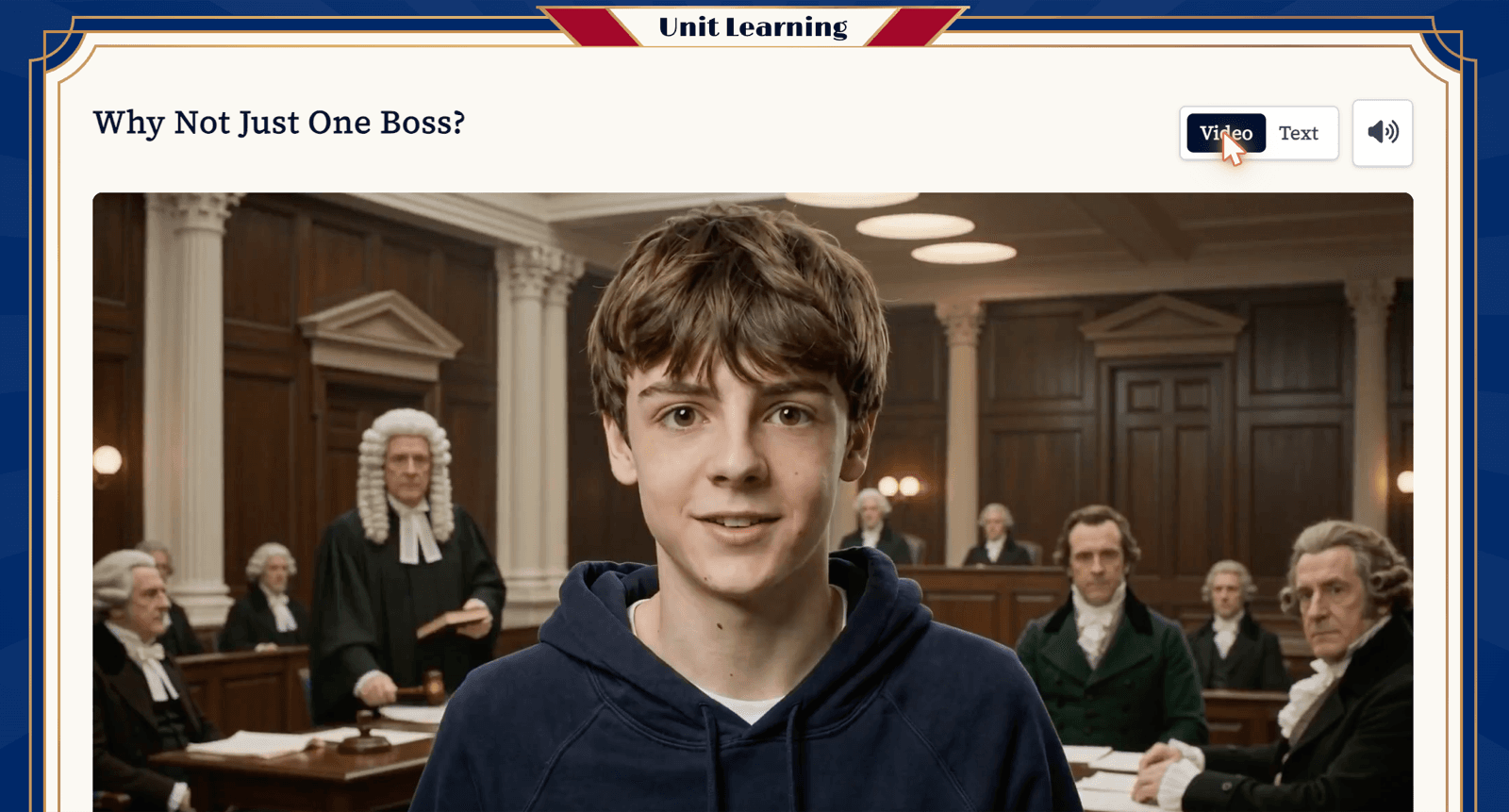
Here's what students experience in the real product: a short lesson video, the same text and visuals, page controls, and a check question pulled from the lesson. Adults can see afterward where recall held and where support is needed.
After a few reps, the group view turns answers into question-level evidence.
When you split up the work, no one person controls everything.
That was one of 128
Video, memory hook, recall practice, and review that brings back the misses — across the whole official bank. Want it for your class this fall?
Students learn the core facts, practice them in multiple modes, and keep seeing what they missed until the knowledge is usable.
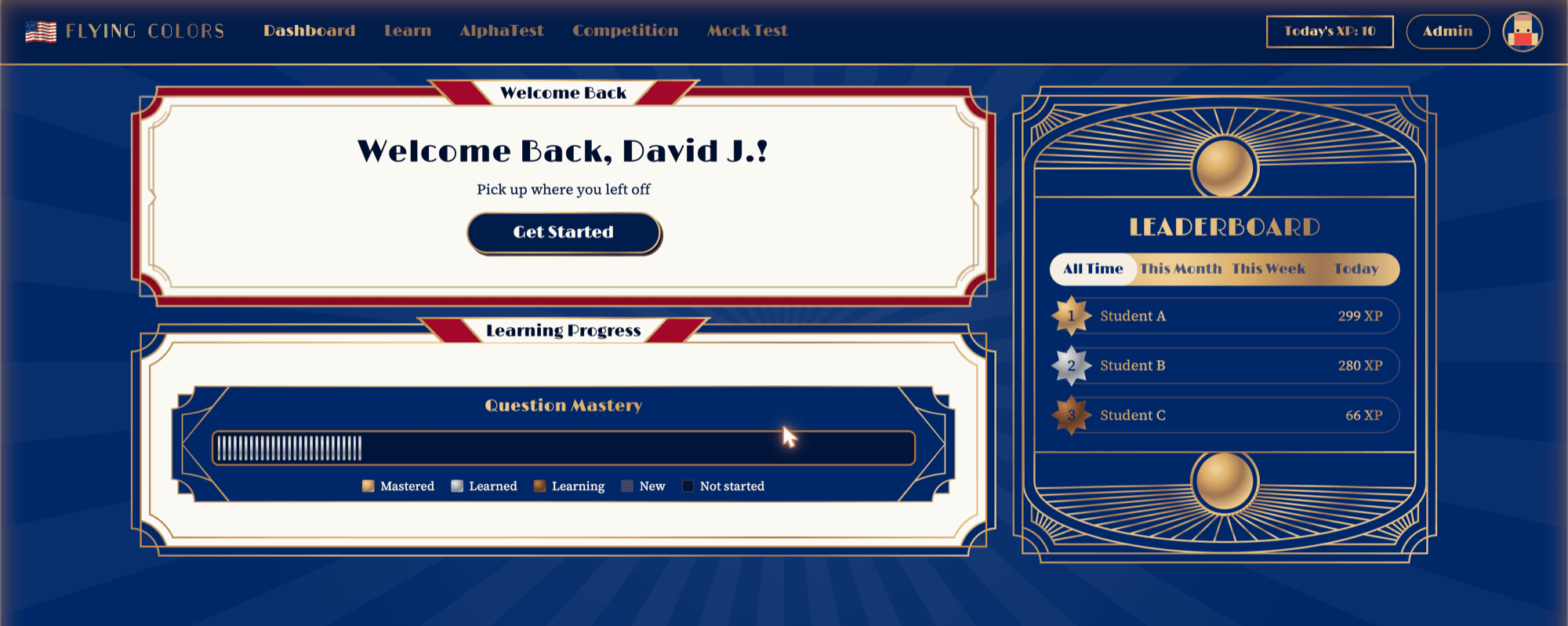
Students can see what needs another rep. Adults can see which ideas are holding and where support is still needed.
One hand-illustrated poster for every question, each pairing a rhyming hook with a vivid scene — so the answer sticks long after the lesson ends.
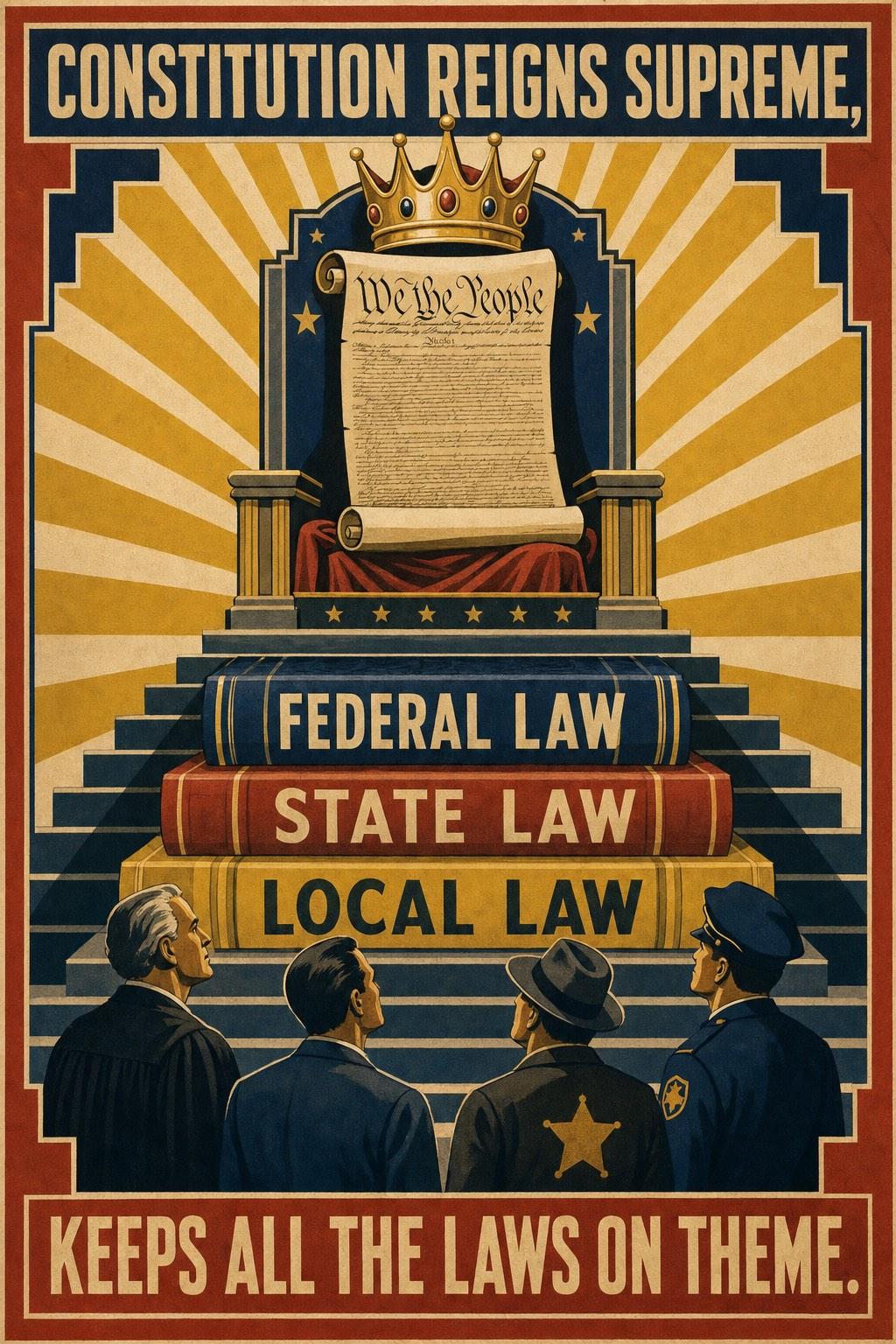
“Constitution reigns supreme, keeps all the laws on theme.”
Q: What is the supreme law of the land?
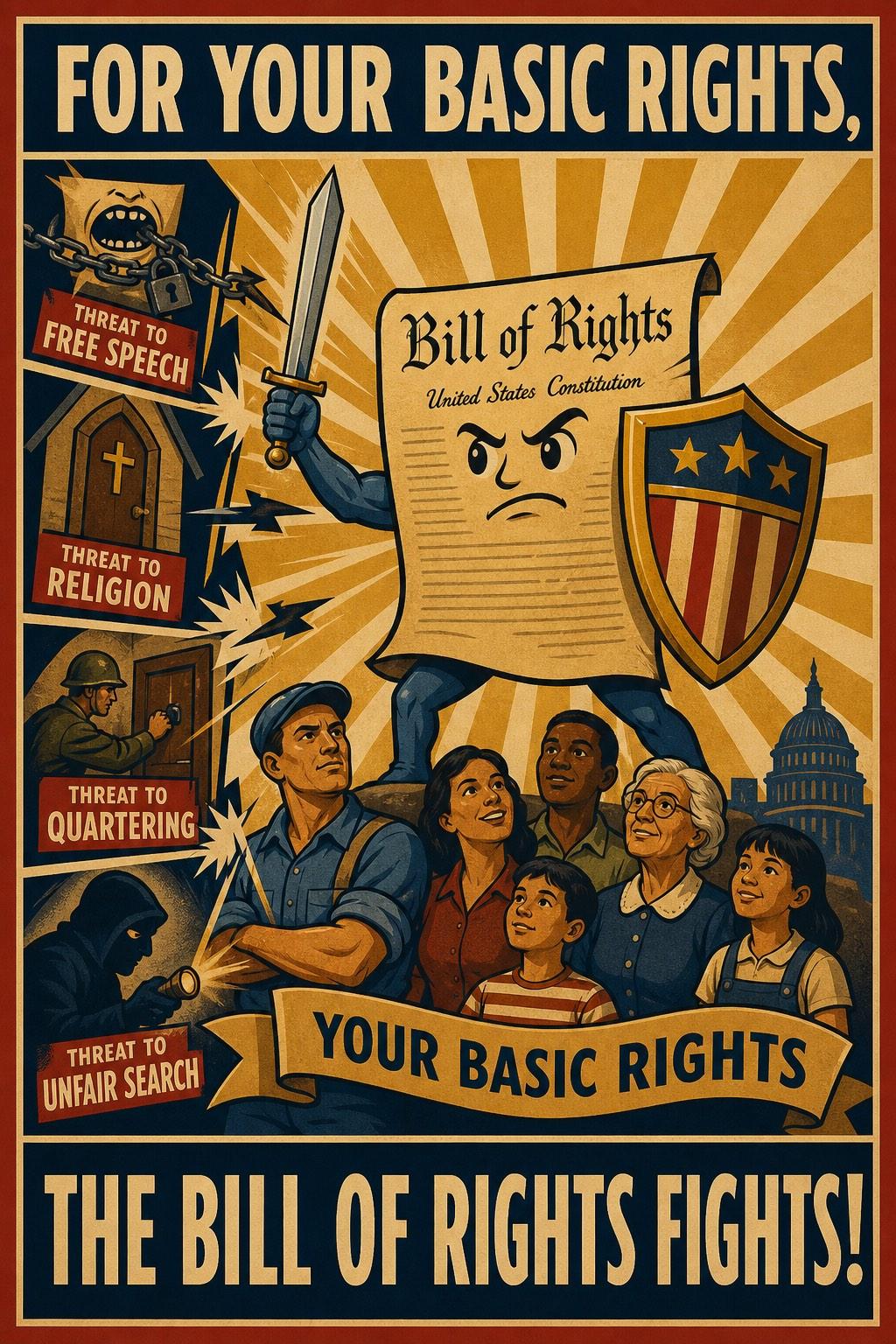
“For your basic rights, the Bill of Rights fights!”
Q: What does the Bill of Rights protect?
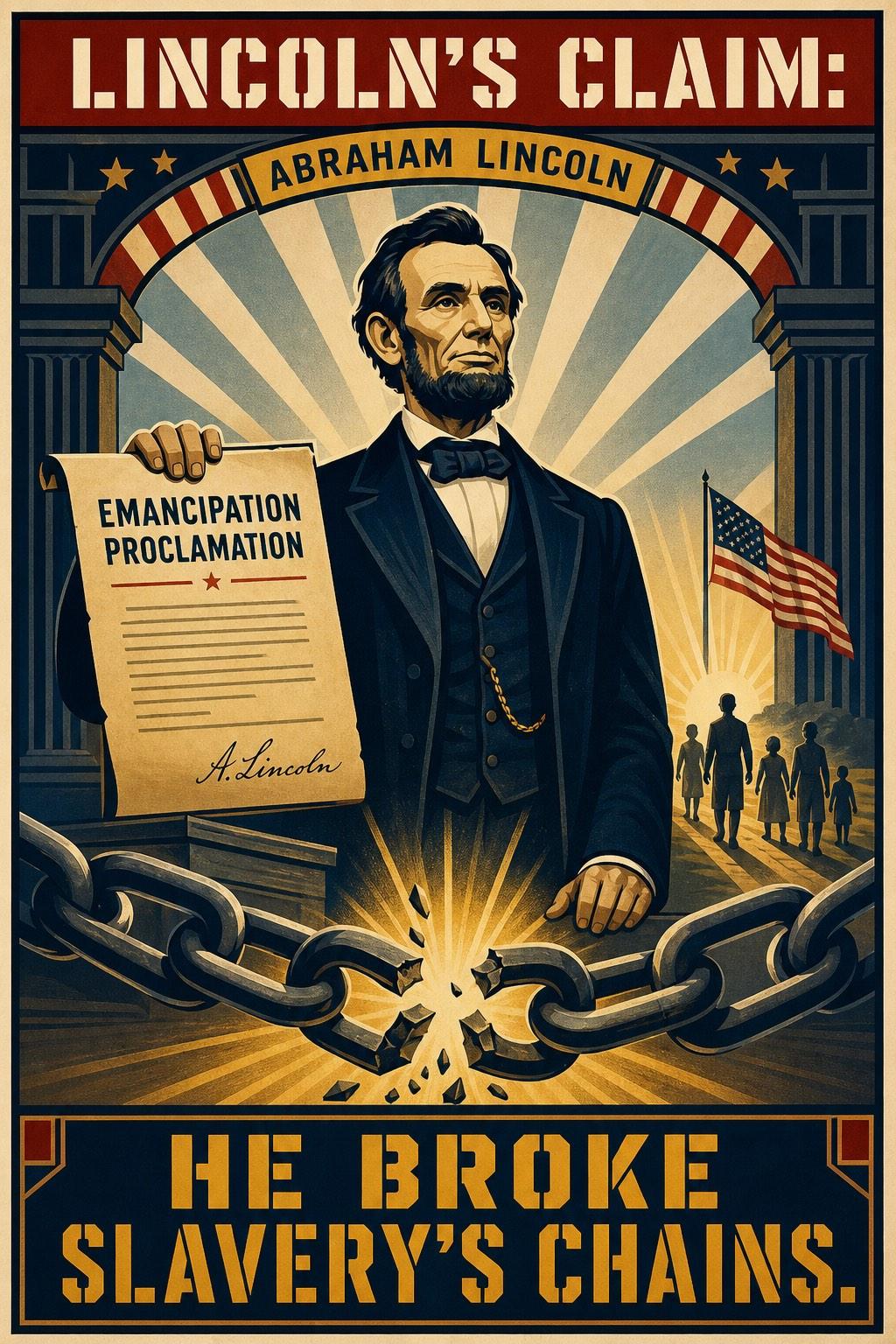
“Lincoln's claim: he broke slavery's chains.”
Q: Abraham Lincoln is famous for many things. Name one.
A head-to-head game mode gives students a low-stakes reason to come back and practice.
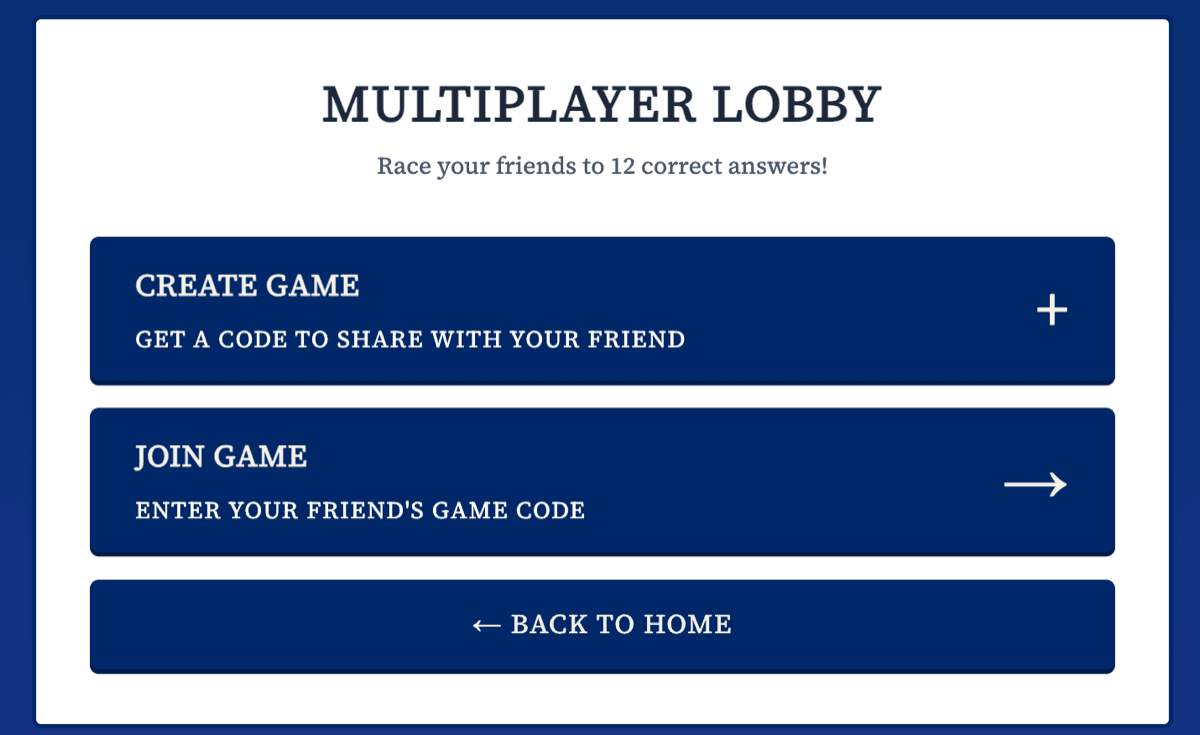
Create a lobby, share a code, and race head-to-head. Every point is earned by proving civic knowledge.
Give students repeated practice, and give your team a clearer view of who is actually mastering the material.
Civic readiness is becoming a graduation requirement: 13 states already require students to pass a citizenship-test-style assessment to earn a diploma — and the list keeps growing. Source
Run classrooms, co-ops, clubs, or pilot groups without losing the individual learner view.
See what each student has mastered, what is in progress, and what has not started.
Attempt history, accuracy, time on task, and weak spots help adults know where support is needed.
Designed for teams that want a focused way to strengthen civics practice before scaling wider.
Plan a pilot in time for fall — in the year America turns 250. Demo and pilot inquiries get a response within one school day.
Research and plain-English explainers on how students actually learn civics.
A federal study following 18,000 kids found that more time on social studies — not more reading class — is what's linked to stronger reading. Here's the evidence, and why it matters for civics.
On July 4, 2026, the United States marks 250 years since the Declaration of Independence. What the semiquincentennial is, who's organizing it, and a civics check-in for the milestone.
The 2025 U.S. citizenship civics test uses a 128-question bank, asked orally, with 12 of 20 needed to pass. Here is how it works — and why the questions matter beyond the interview.
More states now require a civics test to graduate — many built on the U.S. citizenship questions. How the rules vary by state, three examples, and what the numbers really mean.
On the nation's civics benchmark, only about 1 in 5 eighth graders reaches NAEP Proficient — and for the first time in decades, the score is slipping. Here is what the numbers say, and what they don't.